

Middleton Sellers' Pricing Reality Check: 5 Data Points That Matter More Than Your Neighbor's Sale
Pricing a home in Middleton can feel oddly personal. You hear what "the house down the street" got, you remember how quickly it went pending, and suddenly that one sale becomes the measuring stick for everything. But a neighbor's closing price is just a headline—without the context, it can push you toward a number that either leaves money on the table or invites a painful series of price reductions. The better approach is calmer and more exact: rely on the data points that actually predict what qualified buyers will pay today.
In the Madison-area market—especially in Dane and Jefferson Counties—micro-shifts happen fast. One month of changing rates, a new wave of listings, or a different mix of buyer demand can swing the "right" price more than most sellers expect. Below are five pricing realities I walk Middleton homeowners through so they can choose a list price that attracts strong offers and protects their timeline.
1) The freshest comparable sales (and what they don't tell you)

Closed sales are the foundation of pricing, but the key is using recent and truly comparable transactions—ideally within the last 30–90 days and as close as possible in location, condition, and layout. In Middleton, two homes with the same square footage can live very differently: a split-level versus a two-story, a finished lower level versus storage, or a tucked-away lot versus a high-traffic corner.
What sellers often miss is that closed sales are backward-looking. They reflect decisions made weeks or months earlier, under different competition and interest rates. That's why I look beyond the final price to the story behind it: Did the winning buyer waive inspection? Was there an appraisal issue? Did the home get multiple offers immediately or sit for a few weeks and then accept a discount? Context turns "a number" into an actionable pricing signal.
Reality check: If your neighbor's sale was a unique outlier—newer roof, remodeled kitchen, premium lot, or simply a bidding-war week—it may not be the benchmark you want it to be.
2) Active listings: your real-time competition
Active listings matter more than most people expect because they represent the choices buyers can make right now. Even if a home hasn't sold, it's still competing for attention in the same search results and showing schedules. If several similar homes are listed around your target price—and they're not moving—that's a sign your number may be too optimistic for current demand.
When reviewing actives, focus on the details buyers focus on: overall condition, the "feel" of the floor plan, natural light, updates, and curb appeal. This is where strategic marketing ties directly into pricing. If your home shows better, photographs stronger, and feels more move-in-ready than the competition, you can justify a stronger position. If it's clearly behind—dated baths, worn flooring, deferred maintenance—the most expensive pricing strategy is pretending those things don't matter.
In the Madison area, many buyers are decisive and well-informed. They'll tour two or three homes, compare notes, and choose the one that feels like the best value. The right list price doesn't just aim for the highest number—it aims to make your home the obvious "yes" among the alternatives.
3) Days on market and the "moment of maximum attention"
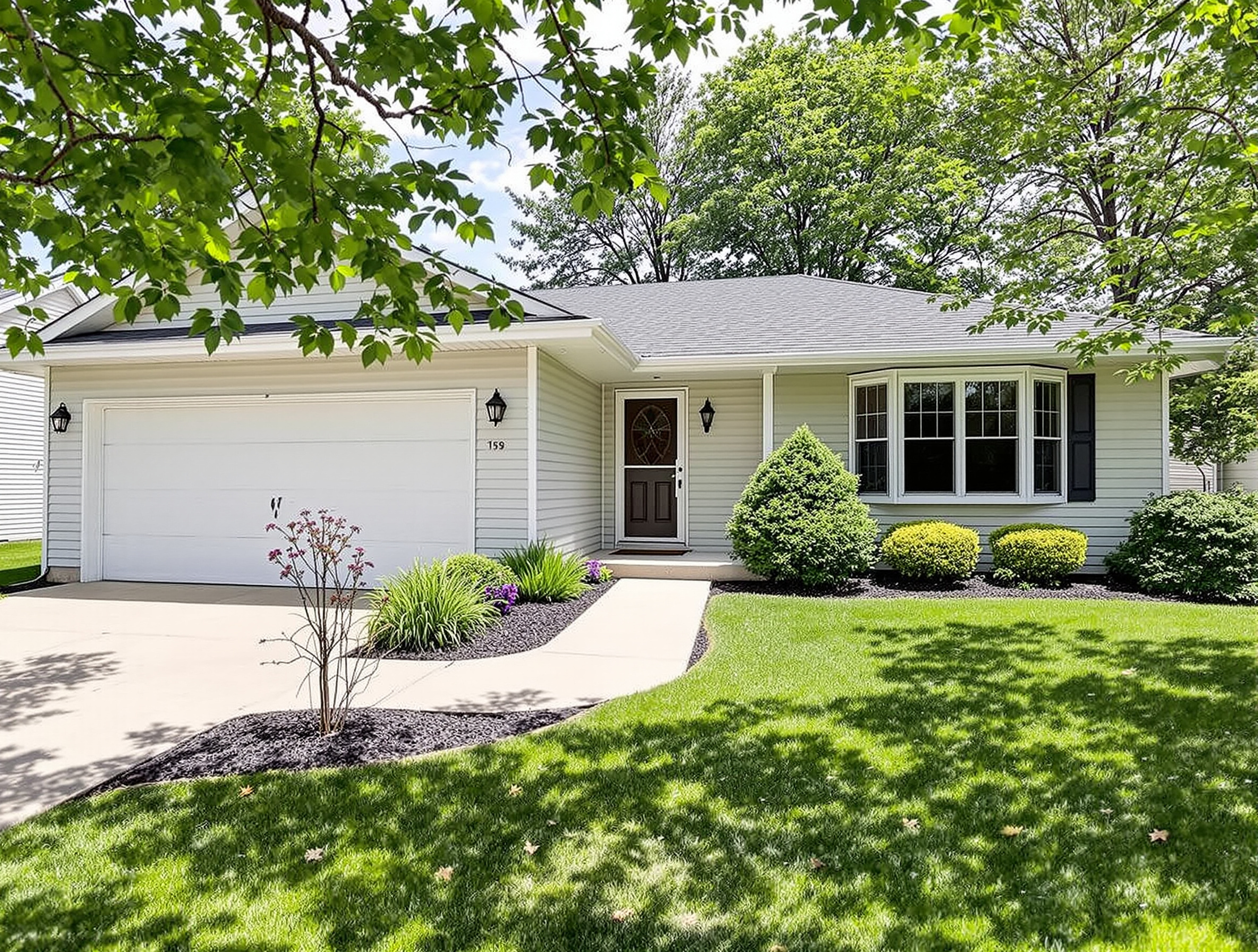
Days on market (DOM) is a pricing thermometer. A well-priced home tends to capture its biggest wave of attention early—especially online, where the first week is when the most serious buyers click, save, and schedule showings. If you launch high "just to see," you risk missing that moment and turning an exciting debut into a slow correction.
DOM needs local interpretation. A home that takes longer than average to go pending might be overpriced, but it could also be fighting a condition issue, a tough layout, or poor presentation. Conversely, going pending in two days isn't automatically proof the home was underpriced—sometimes it simply means the property was a perfect match for the buyers watching that neighborhood.
What matters is aligning your pricing with your goals. If you need a clean, on-time closing (job change, school calendar, purchase contingency), pricing to generate early traffic is often the safest route. If you can be flexible, you still don't want to overshoot so far that you invite low leverage later.
4) Price per square foot—useful, but only in context
Price per square foot is popular because it's simple, but homes are not commodities. In Middleton, smaller homes often command a higher $/sq ft than larger ones, and certain spaces don't "count" emotionally the way sellers expect. A charming main-level layout with updated kitchen and baths can outperform a bigger home with awkward flow, low ceilings in the lower level, or heavy deferred maintenance.
Here's how to use this metric without getting tricked by it: compare $/sq ft only among homes with similar size ranges, similar bed/bath counts, and similar finish levels. Then sanity-check it against buyer perception. Does your home feel bright and easy to live in? Do the big-ticket items—roof, HVAC, windows—support a premium? Or will buyers mentally subtract for future projects?
When I guide sellers through this, the goal isn't to chase the highest $/sq ft in the neighborhood. It's to land on a number that buyers will consider credible—and that appraisals can support—while still leaving room for competitive urgency.
5) Feedback loops: showings, saves, and offer quality

Real-time market response is the most honest pricing data you'll get after going live. Online saves and showing activity tell you whether you're in the right "search bracket." The quality of questions from buyers' agents (timeline, offer terms, inclusions) often signals whether people see the home as a top contender or a "maybe later."
If you're getting showings but no second looks, price can be the culprit—but it's not always the only one. Sometimes it's presentation: lighting, odors, clutter, photos that don't match reality, or a few easy repairs that buyers interpret as bigger problems. Other times it's a mismatch between the list price and the level of updates. A home priced like it's fully renovated will be judged like it's fully renovated.
Offer quality matters too. A strong price with shaky financing, excessive concessions, or a long list of contingencies may net you less (and add risk) than a slightly lower, cleaner offer. Strategic pricing is really about shaping the pool of buyers so you attract the offers that close smoothly.
How to put the five data points together (without overthinking it)
When these signals line up, pricing decisions get easier. I typically build a tight range from the best comparable sales, pressure-test it against active competition, and then choose a list price that fits your target outcome: maximum price, maximum certainty, or a balance of both. From there, the first week of market feedback becomes a guided checkpoint—not a panic button.
Middleton has a strong community feel, easy access to Madison's employment hubs, parks and trails that keep weekends active, and a housing mix that ranges from established neighborhoods to newer builds. That variety is exactly why pricing can't be copied and pasted from one nearby sale. The market rewards homes that are positioned clearly—so buyers immediately understand the value—and penalizes those that make buyers "wait and see."
If you want a pricing plan grounded in local Madison-area realities—Dane and Jefferson County trends, buyer behavior, and what's happening week by week—working with a professional who watches the details can make the difference between a stressful listing and a confident one. The right number isn't the one that sounds best at the kitchen table; it's the one the market will enthusiastically confirm.